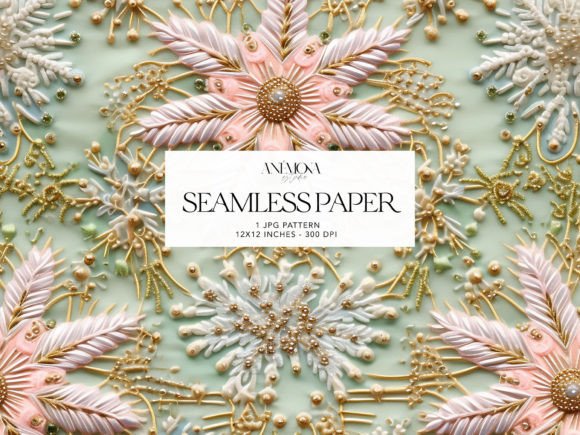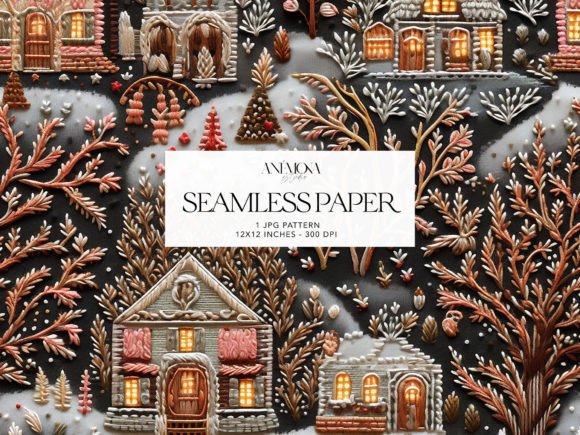
Embroidery Winter Village Paper Review
As an embroidery designer who has spent years translating digital concepts into tangible, stitched realities for small businesses, I approach every new asset with a critical eye. We are not just looking for pretty pictures; we are looking for functional design elements that translate well to thread, fabric, and brand identity. Today, I am reviewing Embroidery Winter Village Paper, a digital asset from Anemona Estudio, specifically through the lens of a creator looking to expand their small business merch offerings.
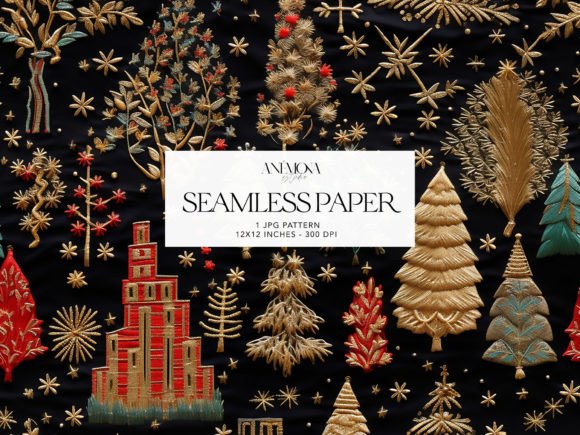
The product description identifies this as a faux embroidery digital paper in JPG format, 300 dpi, RGB, and seamless at 3600px (12″x12″). While it is categorized under Patterns and Graphics, its utility for commercial embroidery projects requires a nuanced understanding of how raster images interact with stitch planning and brand presentation.
First Impressions: Visual Personality and Brand Fit
Upon loading the file, the immediate impression of Embroidery Winter Village Paper is one of warmth and nostalgia. The "faux embroidery" aesthetic mimics the texture of real thread, creating a visual bridge between digital design and handmade craft. For a boutique, bakery, or creative studio, this visual language communicates "handmade," "premium," and "friendly" without saying a word.
The winter village motif suggests a classic, cozy atmosphere. It is not overly modern or stark; rather, it leans into a rustic, decorative charm. This makes it an excellent candidate for brands that want to evoke feelings of comfort and tradition. However, because it is a seamless pattern, it feels more like a background texture or a wrapping paper element than a standalone logo. This distinction is crucial for business owners deciding where to place this design on their custom apparel or packaging.
Real-World Business Applications
So, how does Embroidery Winter Village Paper perform in actual business scenarios? Let’s break down its potential uses for Etsy sellers, merch creators, and local shops.
- Printable Mockups and Packaging: Since this is a high-resolution JPG, its strongest immediate use is in printable mockup creation. You can use this seamless pattern as a background for product photography or as a digital wrapping paper for holiday gift sets. It adds a layer of professional polish to your design assets without requiring complex graphic design skills.
- Sublimation and Heat Transfer: For tote bag design or apron embellishments, this file can be printed onto sublimation paper or heat transfer vinyl. The 300 dpi resolution ensures that the faux stitch details remain crisp when printed on fabric. This is ideal for creating all-over prints on aprons for a winter-themed café or boutique.
- Inspiration for Custom Patches: While you cannot directly embroider a JPG, this pattern serves as a perfect reference for creating an embroidered patch. You can trace elements of the village scene to create a simplified vector version for digitizing. The cohesive look of the pattern can inspire a collection of patches that tell a story when worn together on a jacket or bag.
- Digital Branding Elements: Use the seamless tile for website backgrounds, email newsletter headers, or social media posts during the holiday season. This maintains brand identity consistency across digital touchpoints.
Critical Considerations for Embroidery Production
Here is where my experience as a designer must temper enthusiasm with technical reality. Embroidery Winter Village Paper is a raster image (JPG), not a digital embroidery file (such as PES, DST, or EXP). You cannot send this directly to an embroidery machine. To use this for actual stitching, you must understand the limitations.
If you attempt to auto-digitize this complex pattern, you will likely encounter issues with stitch density. A detailed village scene contains many small elements, tight corners, and varied colors. On a small scale, such as a chest logo or a cap front, these details will merge into a blob of thread. The thread colors may bleed into each other if the spacing is not managed correctly during the digitizing process.
Furthermore, consider the fabric texture. Embroidering a dense, detailed design on a textured fabric like a thick wool coat or a rough canvas tote can lead to puckering if the wrong stabilizer is not used. For dark uniforms, you must account for underlay stitches and potentially use a backing material to ensure the colors pop, which adds bulk to the finished product.
Where to Use Caution
- Small Patch Sizes: Avoid using the full complexity of this design on patches smaller than 3 inches. The details will be lost.
- Cap Embroidery: Curved surfaces distort designs. A wide, seamless pattern like this is difficult to center and stabilize on a cap front without significant distortion.
- Frequent Washing: High-density embroidery on items like staff uniforms that undergo industrial washing may degrade faster if the stitch count is too high relative to the fabric strength.
Enhancing Brand Identity and Customer Trust
Despite the technical hurdles for direct stitching, Embroidery Winter Village Paper offers significant value for brand identity. Consistency is key to customer trust. By using this pattern across your packaging, social media, and printed materials, you create a recognizable visual signature.
For a handmade product seller, the "faux embroidery" look reinforces the artisanal nature of your brand. It signals to the buyer that you value craftsmanship. When customers see this level of attention to detail in your printable mockup or packaging, they perceive higher value in the physical item they receive. It transforms a simple transaction into an experience.
Practical Designer Notes for Implementation
Before you integrate Embroidery Winter Village Paper into your commercial workflow, follow these steps:
- Check Licensing: The description mentions it is perfect for designs and cards, but always confirm the specific commercial licensing terms with Anemona Studio before selling products featuring this design.
- Test in Black and White: Convert the JPG to grayscale to check contrast. If the details disappear in black and white, they will likely get lost in embroidery thread.
- Simplify for Stitching: If you plan to embroider elements from this pattern, hire a professional digitizer or use advanced software to simplify the shapes. Reduce the number of colors and increase the spacing between elements.
- Confirm Hoop Size: Ensure your design fits within your standard hoop size. A 12x12 seamless pattern is large; you will need to crop and scale it appropriately for most garment applications.
- Create a Mockup: Always create a digital mockup showing the pattern on the intended fabric. This helps clients visualize the finished product and approves the scale before production begins.
In conclusion, Embroidery Winter Village Paper is a versatile graphic asset for small business owners, particularly for packaging, digital branding, and sublimation projects. While it is not a ready-to-stitch embroidery file, it serves as an excellent inspiration source and visual tool for enhancing your small business merch. By understanding its limitations and leveraging its aesthetic strengths, you can create cohesive, professional, and charming brand experiences that resonate with your customers.