Reviewing the 1 1/2 Harris Embroidery Font for Business
As an embroidery designer who has spent years digitizing logos and testing fonts for commercial clients, I know that typography is the backbone of brand identity. When a small business owner approaches me for custom apparel or branded merchandise, they are not just buying thread on fabric; they are buying recognition and trust. Recently, I evaluated the 1 1 2 Harris Embroidery Font to determine its viability for professional use in small business merchandising. This review focuses on how this specific digital embroidery file performs in real-world applications, from boutique patches to staff uniforms.
First Impressions: Visual Personality and Style
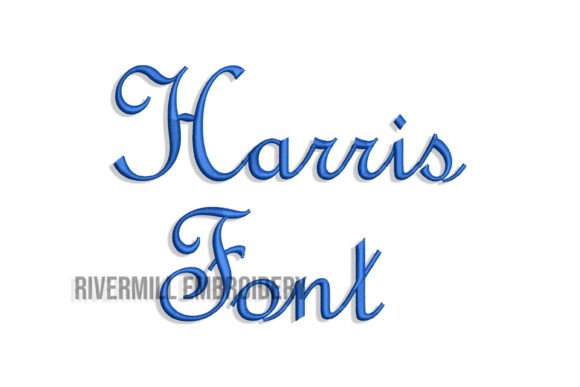
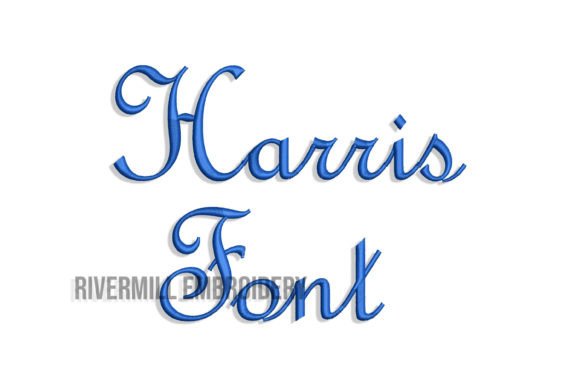
The first thing I look for in a new typeface is its inherent personality. Does it feel corporate and cold, or warm and inviting? The 1 1 2 Harris Embroidery Font strikes a balance that is increasingly rare in the saturated market of machine embroidery design. It feels approachable yet structured. It does not scream "rustic" in a way that limits it to farmhouses, nor is it so sleek that it feels out of place in a handmade craft setting. Instead, it offers a classic, clean aesthetic that translates well across various industries.
For a bakery, a florist, or a local café, this font suggests reliability and care. It is legible without being boring. In the context of House and Embroidery projects, this versatility is crucial. A font that is too decorative can become illegible at smaller sizes, while a font that is too plain may fail to capture the unique spirit of a creative studio. The Harris font sits comfortably in the middle, offering enough character to stand out on a tote bag design while remaining professional enough for a corporate uniform.
Real-World Applications for Small Business Merch
The true test of any embroidery file is its performance on actual products. I simulated several use cases for the 1 1 2 Harris Embroidery Font to see how it holds up in a commercial embroidery environment.
- Branded Patches: This is perhaps the strongest use case. At 1 1/2 inches, the letters are substantial enough to be read clearly on an embroidered patch. Whether applied to a denim jacket, a canvas backpack, or a laptop sleeve, the font maintains its integrity. For Etsy sellers creating custom name patches or boutique labels, this size is ideal for visibility without overwhelming the garment.
- Staff Uniforms and Aprons: For coffee shops and bakeries, apron embroidery is a subtle but powerful branding tool. The Harris font works beautifully on the chest pocket area of an apron. It provides a personalized touch that elevates the perceived value of the service. Similarly, on work shirts, the upper and lower case options allow for proper capitalization of names, adding a layer of professionalism that all-caps fonts often miss.
- Cap Embroidery: Caps are tricky due to the curved surface and limited space. The 1 1/2 inch height is generally suitable for the side of a cap or potentially the front if the word is short. However, designers must be mindful of the push and pull of the fabric. The font’s structure seems robust enough to handle slight distortion, but testing is essential.
- Tote Bags and Packaging: Canvas tote bags are a staple for handmade product businesses. The Harris font looks excellent when centered on a tote, serving as a minimalist logo. It also works well for tagging high-end packaging, where a small embroidered label can turn a simple box into a premium unboxing experience.
Technical Considerations and Design Limitations
While the aesthetic appeal is strong, a professional designer must always consider the technical constraints of machine embroidery. The product description notes that the set includes upper and lower case letters and numbers 0-9 in PES format. It is vital to remember that the stitch information provided is specifically for the letters “A” and “a.” This means that wider letters like “W” or “M” will have different stitch counts and widths, which impacts layout planning.
When using the 1 1 2 Harris Embroidery Font, pay close attention to stitch density. If the density is too high for the chosen fabric, you risk puckering, especially on lightweight materials like silk or thin cotton blends. Conversely, if the density is too low on thick fabrics like fleece or heavy denim, the backing might show through. I recommend always running a test stitch-out on the actual fabric you intend to use for the finished product.
Another critical factor is the hoop size. While 1 1/2 inches is relatively small, ensuring your hoop is correctly positioned is key to preventing hooping marks on delicate garments. For curved surfaces like caps, using a cap frame and appropriate stabilizer is non-negotiable. The font’s performance on textured fabric should also be evaluated. Highly textured towels or ribbed knits may obscure finer details, so this font is best suited for smooth to moderately textured materials.
Impact on Brand Identity and Customer Trust
Consistency is the cornerstone of brand identity. Using a single, well-chosen font across all touchpoints—from business cards to embroidered merchandise—creates a cohesive visual language. The 1 1 2 Harris Embroidery Font contributes to this consistency by offering a reliable typographic voice. When customers see the same clean, professional lettering on their coffee cup sleeve, their tote bag, and their loyalty card, it reinforces brand recognition.
Furthermore, high-quality embroidery signals quality in the product itself. A sloppy, poorly digitized font can make a handmade product look amateurish. In contrast, the crisp lines and balanced spacing of the Harris font suggest attention to detail. This perception of quality builds customer trust. For small business owners, this translates directly to higher perceived value and potentially higher price points. It transforms a simple item into a branded asset.
Practical Designer Notes for Implementation
Before integrating the 1 1 2 Harris Embroidery Font into your production workflow, consider these practical steps to ensure success:
- Test in Black and White First: Before committing to expensive thread colors, stitch out the design in black thread on white fabric. This allows you to check for clarity, spacing issues, and any potential digitizing errors without the distraction of color.
- Check Thread Color Contrast: Ensure there is sufficient contrast between the thread and the fabric. Light threads on dark uniforms may require an underlay or a different digitizing approach to remain visible.
- Verify Commercial Licensing: Always confirm the license terms associated with the digital embroidery file. Ensure you have the right to use the design for commercial embroidery projects and resale items.
- Create Printable Mockups: Use design software to create a printable mockup for client approval. This helps visualize how the font will look on different garments before stitching begins.
- Use Proper Stabilizer: Match your stabilizer to your fabric. Cut-away stabilizer is often best for garments that will be washed frequently, while tear-away may suffice for stable fabrics like canvas totes.
In conclusion, the 1 1 2 Harris Embroidery Font is a versatile and professional addition to any embroidery designer’s library. It meets the needs of small business owners looking for reliable, attractive typography for their branded merchandise. By understanding its technical requirements and leveraging its visual strengths, you can create high-quality, memorable products that enhance your brand identity and delight your customers.